
Soft Case vs Hard Case: Which Cue Case Is Right for You?
Your cue spends more time in its case than it does on the table, so the case you choose matters more than most players give it credit for. Here’s how to decide between a soft case and a hard case, and what to actually look for in either.
Soft Cases: Light, Flexible, Everyday
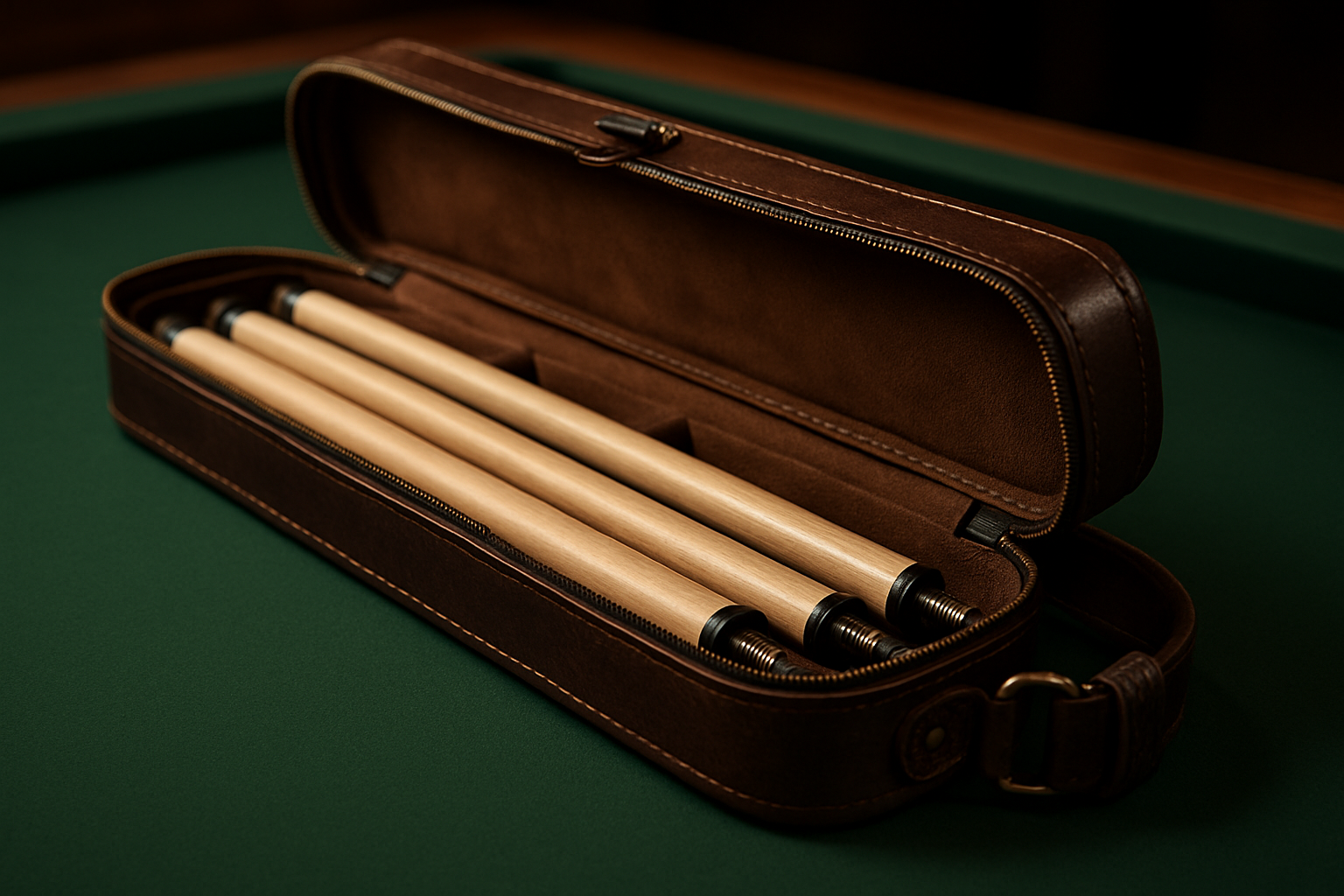
Soft cases are padded fabric or vinyl, usually with a shoulder strap, and built for players who are carrying their cue regularly — to and from the club, between tables, in and out of a car. They’re lighter, cheaper, and easier to carry for long periods than a hard case, and a decent one still offers real protection against knocks and scuffs during normal handling.
What they don’t do well is protect against serious impact — drop a soft case, sit something heavy on it, or check it as luggage, and your cue is far more exposed than it would be in a hard case. If your cue mostly travels by hand between home and the club, a soft case from our Cases range is usually all you need.
Hard Cases: Maximum Protection
Hard cases — aluminium or rigid moulded shells — are built for players who travel with their cue: flights, tournaments, or anyone who just wants total peace of mind. The rigid shell protects against drops, crushing and rough handling in a way no soft case can match, and most have individually fitted compartments that keep your shafts and butt from knocking against each other in transit.
The trade-off is weight and bulk — a hard case is heavier to carry and takes up more space than a soft one. If you’re flying to a tournament or your cue represents a serious investment, that trade-off is worth it every time.
How Many Holes Do You Need?
Cases are often described by “holes” — the number of shafts and butts they can hold. A single 2-piece cue only needs a small case, but if you carry a spare shaft, a jump/break cue, or extensions and accessories, a 3, 5 or even 7-hole case gives you room to carry everything in one bag instead of juggling separate pouches. Think about what you actually carry to a session before sizing up.
What Else to Look For
- Padded interior: your shafts should sit snugly, not rattle around.
- Accessory pockets: somewhere to keep chalk, a glove and a spare tip without them loose in the main compartment.
- Secure closures: zips and clasps that won’t work themselves open on the way to the club.
- Comfortable carry: a strap or handle that won’t dig in if you’re walking any distance.
Our Recommendation
Most club and casual players are well served by a good soft case for everyday use. If you compete, travel with your cue, or you’ve just invested in a premium cue from our Cues range and want it protected properly, step up to a hard case. Either way, browse our full Cases range to find the size and style that fits how you actually play.







Add comment