
Do You Need a Pool Glove? Pros, Cons and How to Choose One
Walk into any club and you’ll see players split roughly down the middle — some swear by a pool glove, others have never worn one and don’t see the point. Neither side is wrong. Here’s what a glove actually does, when it helps, and how to pick one if you decide to try it.
What a Glove Actually Does
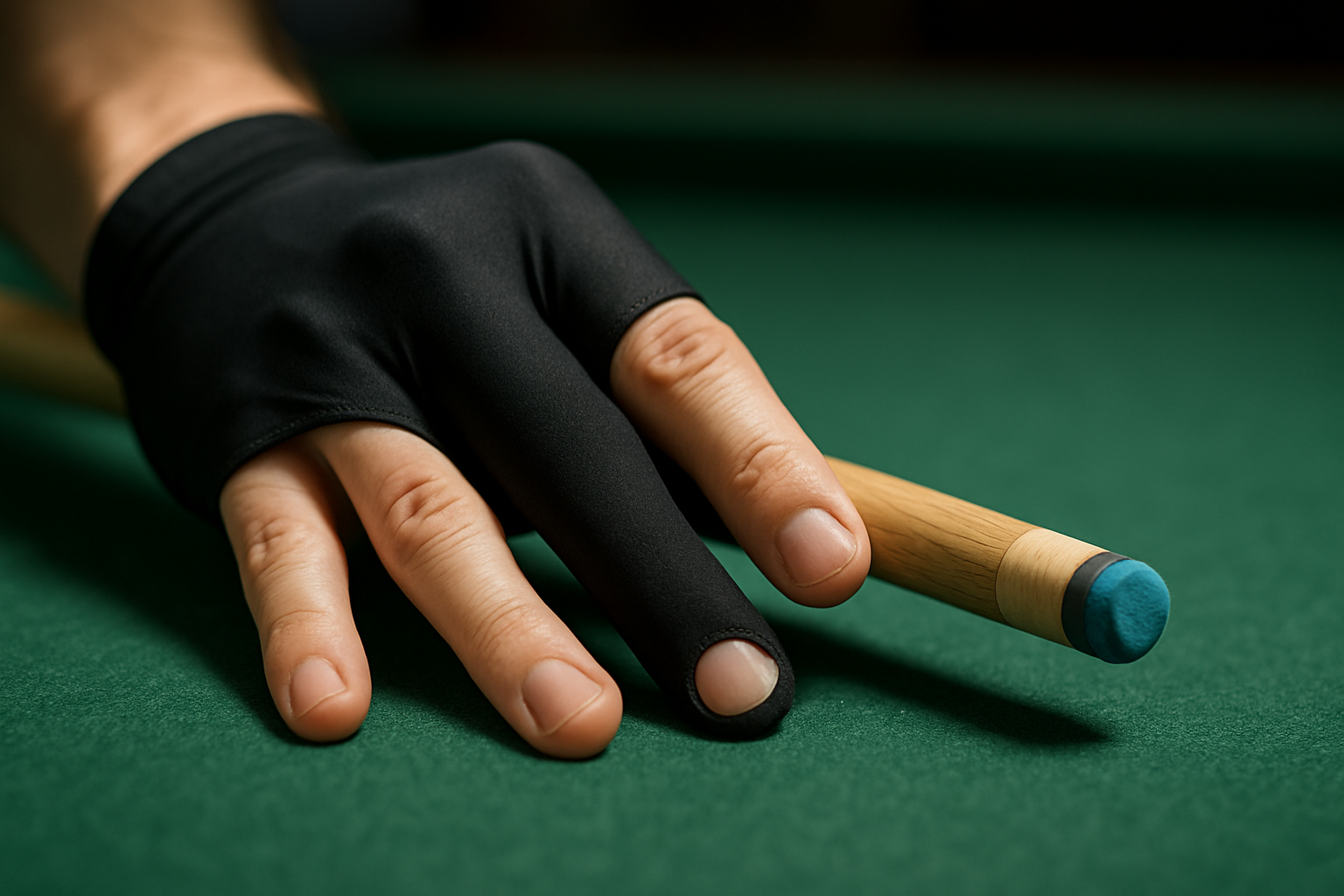
A pool glove isn’t about grip on the cue — it’s about your bridge hand, the one flat on the table that the cue slides through. Skin, especially warm or slightly sweaty skin, creates friction against the shaft, and that friction shows up as a jerky, inconsistent stroke instead of a smooth glide. A glove’s smooth synthetic panel across the fingers removes that friction entirely, so the only variable affecting your stroke is your own technique.
The Case For Wearing One
- Consistency: your bridge feels the same every session, regardless of temperature, humidity or how sweaty your hands get.
- Smoother cueing action: less drag through the bridge means a cleaner, more repeatable stroke.
- Longer sessions: no friction burn or irritation on your bridge fingers during long practice sessions or tournaments.
- Table cloth protection: keeps natural hand oils off the cloth over time.
The Case Against
Some players feel a glove changes their sense of feel and touch — the bridge is part of how you gauge a shot, and a layer of fabric between your fingers and the cue can feel like it’s dulling that feedback, at least until you get used to it. If you’ve built years of muscle memory bare-handed, switching can genuinely take an adjustment period. It’s also simply personal preference — plenty of top players never wear one at all.
Full Glove vs Half Glove
Most gloves cover three fingers (the ones that actually bridge the cue), leaving your thumb and little finger free — this is the standard, most common style. Full gloves exist too, mainly for warmth or comfort rather than performance. For pure bridge-hand performance, a standard three-finger glove is the better choice.
Getting the Fit Right
A glove that’s too loose bunches up and defeats the purpose — you want a snug fit that stays put through a full session without sliding or wrinkling under your fingers. Check sizing carefully (most run S/M, L/XL or similarly banded) and pay attention to left vs right hand listings, since gloves are typically hand-specific.
Try Before You Commit
If you’re on the fence, that’s reasonable — a glove is a small, inexpensive thing to test for a few sessions before deciding if it’s for you. Browse our full Gloves range, or come try a few on at Sessions Billiards & Darts and hit some balls before you buy.







Add comment