

Cue Tips 101: How to Pick the Right Size and Type
The tip is the only part of your cue that actually touches the ball, which makes it the single most important piece of equipment for shot-making — and the most overlooked. Here’s how to make sense of tip size, hardness and material so you can choose (and maintain) the right one.
Why Tip Size Matters
Tip diameter is usually measured in millimetres and typically ranges from around 8mm (snooker) up to 13-14mm (American pool). A larger tip gives you more surface area to make contact with the cue ball, which is more forgiving on slightly off-centre hits but gives you less precise control over spin. A smaller tip lets you place spin with real precision but punishes a mishit far more obviously — miscue a snooker-sized tip and you’ll know about it immediately.
Match your tip size to your format: smaller tips for snooker and English pool, larger tips for American pool and Chinese Eight Ball. Browse our full Tips range filtered by size to find the right fit for your cue and your game.
Soft, Medium or Hard?
- Soft tips grip the ball for longer on contact, making spin easier to generate — great for players who like to work the cue ball around the table, but they wear down and need reshaping more often.
- Medium tips are the sensible all-rounder — enough grip for control, enough durability that you’re not reshaping every session. If you’re not sure, start here.
- Hard tips hold their shape longest and transfer energy efficiently (useful for break cues), but give you less natural feel for touch shots.
Layered vs Single-Piece Tips
Many premium tips are built from multiple thin layers of leather pressed together rather than a single piece. Layered construction tends to hold its shape better and resist splitting over time, which is why you’ll see most serious players’ cues fitted with one. A single-piece tip is usually cheaper but will need more frequent attention.
Signs You Need a New Tip
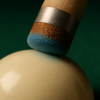
A tip that’s gone flat, glazed over, mushroomed out past the edge of the ferrule, or started splitting will cost you miscues and inconsistent contact no matter how good your technique is. If chalk won’t hold or you’re miscueing more than usual on shots you’d normally make cleanly, it’s worth checking your tip before you blame your stroke.
Fitting a New Tip
Fitting a tip properly — trimming it flush to the ferrule and shaping the crown to a slight curve — makes a real difference to how it plays. If you’re not confident doing this yourself, bring your cue and a new tip from our Tips range in to Sessions Billiards & Darts and we’ll fit it properly while you wait.
Keep It Chalked
Even the best tip is only as good as your chalking habits. A quick twist of chalk before every shot keeps your tip gripping consistently and is the cheapest way to protect your investment in a good tip. See our full range of chalk to find one that suits your style of play.






Add comment